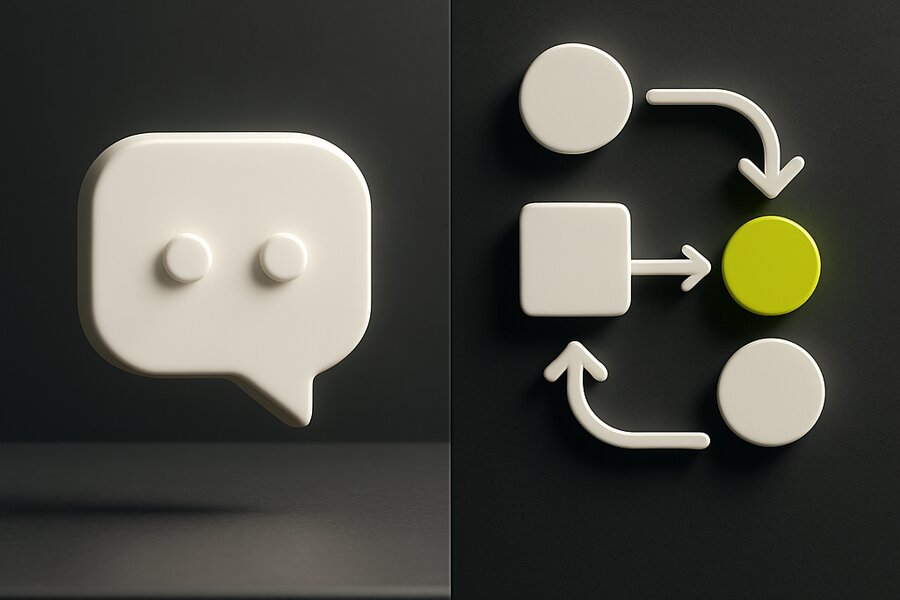
"We want an AI chatbot" is one of the most common opening lines in a first conversation with a new client, and it's usually the wrong starting point — not because chatbots are bad, but because half the time what the business actually needs is automation, and the two solve genuinely different problems.
An AI Chatbot Answers Questions
A chatbot sits on your website or in a messaging app and responds to whatever a visitor types, using your business's information as its knowledge base. Done well, it handles the questions your team currently answers by email or phone dozens of times a week — opening hours, pricing bands, what areas you cover, how your process works, what to expect at each stage. It's reactive by nature: it waits for someone to ask.
A good chatbot reduces the volume of repetitive enquiries reaching a human, qualifies leads before they hit your inbox, and is available at 11pm when your office isn't. Its ceiling is that it only responds — it doesn't go and do anything on your behalf inside your other systems.
AI Automation Does Work
Automation is different. It's a workflow, usually invisible to the customer, that takes an action without anyone needing to prompt it: a new enquiry lands, gets automatically checked against your criteria, gets logged in your CRM with the right tags, and a personalised first-response email goes out — all before anyone on your team has opened their inbox. Or: a job is marked complete in your system, triggering an invoice draft, a review request, and a follow-up reminder three weeks later.
Automation is proactive rather than reactive. It runs on triggers — a form submission, a status change, a scheduled time — rather than waiting for someone to ask it something. This is usually where the larger time savings live, because it removes an entire manual step from a process rather than just making one interaction faster.
Where They Overlap
The line blurs because a chatbot conversation can trigger automation — a lead qualification chat that, once it identifies a serious enquiry, automatically creates a CRM record and notifies the right team member. That combination is usually the most valuable version of "an AI chatbot," but it's really automation with a chat interface bolted on the front, and it's worth being clear about that distinction when you're briefing anyone building it for you, including us.
How to Choose Which to Build First
Ask where the actual bottleneck is. If your team spends significant time answering the same handful of questions from prospective customers, a chatbot addresses that directly. If your team spends time on administrative steps after a decision has already been made — data entry, chasing documents, sending standard follow-ups, updating multiple systems with the same information — that's automation territory, and a chatbot won't touch it.
Most businesses have both problems to some degree. The honest answer is usually to fix whichever one is costing more time right now, prove it works, and build the second one once the first is embedded and trusted.
If you're not sure which applies to you, that's exactly the kind of question a free AI audit is for — a short, no-obligation look at where your actual time is going before you spend anything on either.